Why DID the Turtle Cross the Road?
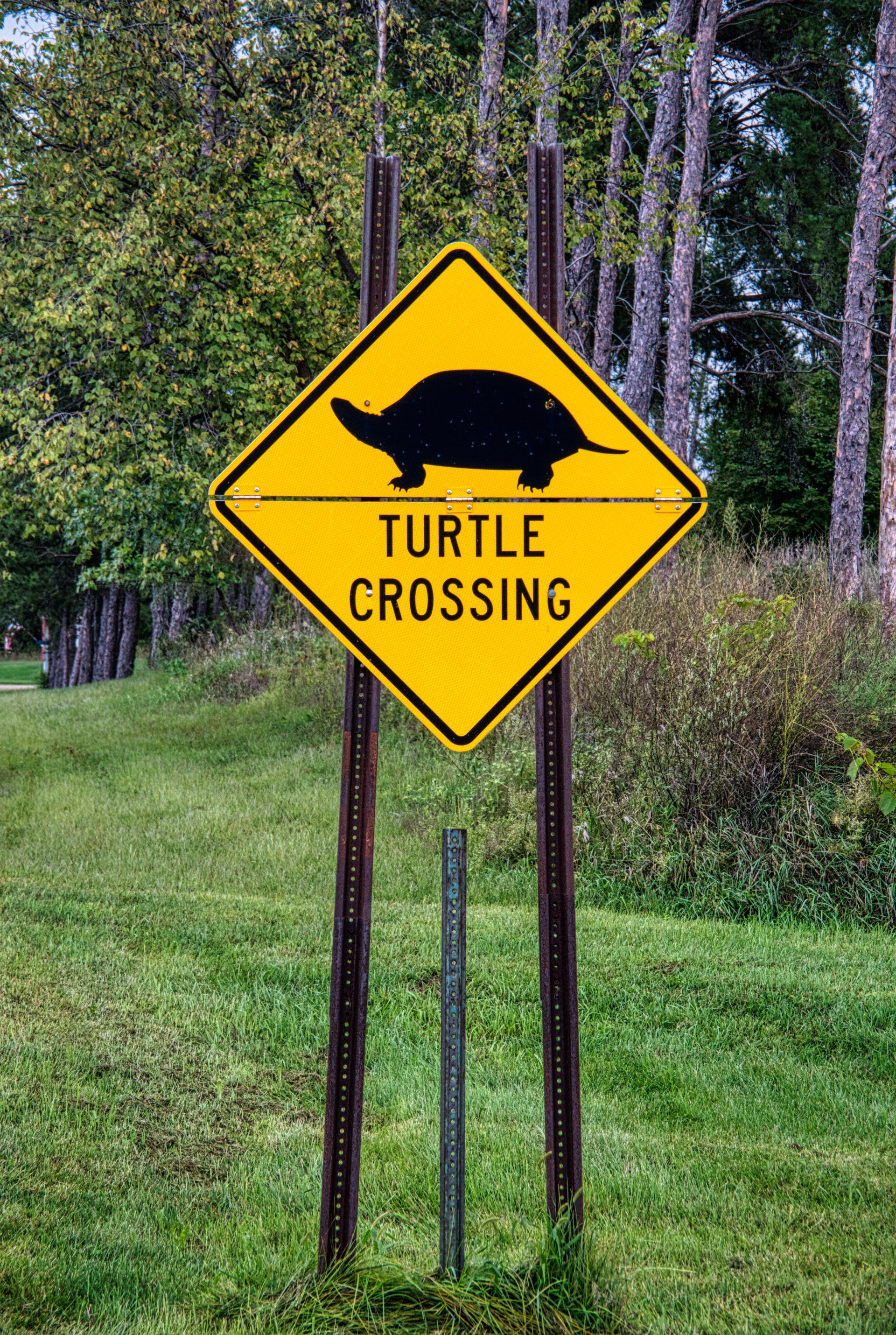
Florida is home to an incredibly diverse ecosystem. Part of that diversity includes shelled reptiles, such as freshwater turtles, terrestrial turtles, and our only native tortoise, the Gopher Tortoise. Many of these species rely on habitats that often sit directly beside or are cut through by roadways, such as wetlands, retention ponds, sandy uplands, and wooded edges. It’s common to see turtles and tortoises attempting to cross in these areas. Research from the Florida Fish and Wildlife Conservation Commission (FWC) and several long-term studies show that turtle road crossings in Florida peak between June and September, especially after rain. Female freshwater turtles often cross roads to find open, sandy nesting areas, while males wander widely in spring to find mates. Juveniles disperse midsummer to establish their first territories, as well.
Eastern Box Turtles, which are fully terrestrial and spend little time in water, also cross roads frequently as they roam for mushrooms, berries, and insects, especially during spring and early summer, when females travel long distances to locate nesting sites. Box turtles have remarkably strong homing instincts and will continue attempting to follow the same route even if displaced. Roadways are often built through the middle of their route, leaving them no option but to cross. Gopher Tortoises cross roads throughout the year, with peaks in spring and fall as they search for new burrow sites, mates, or feeding areas, and their crossings are especially common in rapidly developing regions where burrows have been damaged or destroyed.
Unfortunately, roadways pose a major threat to all of Florida’s turtle and tortoise species. A long-term study at Lake Jackson, Florida, conducted over a 44-month monitoring period, from February 2000 through November 2003, recorded 8,833 turtles either killed or attempting to cross a single 4-lane highway. Before mitigation was added, the mortality rate averaged about 16 turtles per mile per day (Aresco, 2005). Under heavy traffic conditions, the probability of a turtle surviving a single road crossing was estimated at only 2%. Additional demographic research shows that many turtle populations cannot sustain more than 2–3% adult mortality per year without beginning to decline (Congdon et al., 1993). Yet, some roadside populations in Florida lose between 6–29% of adult females annually during nesting migrations, a level of loss that can rapidly destabilize populations and skew sex ratios.
Most aquatic turtle road deaths occur adjacent to development, while box turtle collisions are most common in wooded neighborhoods and rural roads, like our Ocala National Forest. Gopher tortoise fatalities also spike in areas undergoing construction where burrows are destroyed, forcing tortoises to relocate through hazardous areas. These animals are not wandering aimlessly. They are performing natural behaviors such as nesting, dispersing, basking, or foraging. The roads simply run through the places they have been using for centuries.
Even with the challenges turtles and tortoises face on Florida’s roads, there are simple but powerful ways the public can help. One of the most important things is to leave them exactly where they belong. If you can safely stop to assist a turtle on the road, always move it only far enough to finish crossing in the direction it was already heading. Never relocate it to a new pond, wooded area, or “safer" habitat, even if the place it’s walking toward seems strange, developed, or unsafe to us. Turtles and tortoises spend their entire lives (sometimes 50 to 100 years) learning the layout of their home range. When people move them to unfamiliar locations, it doesn’t save them. Instead, it forces them to spend the rest of their lives wandering in search of home, dramatically increasing their risk of dehydration, starvation, crossing roads, and encounters with predators. Relocating turtles can also unintentionally spread diseases such as ranavirus and upper respiratory infections into new wild populations, putting entire communities of turtles at risk.
It’s completely understandable to feel emotional when you see a turtle in the middle of “nowhere” or heading toward an area that looks wrong, but turtles know the local terrain far better than we do, and what feels like helping can actually cause harm. The best thing you can do is help check it over (top and bottom) for any blood or other apparent injuries. If it appears unharmed and is safe to cross the road, point it in the right direction and leave it be. Never pick it up by the tail. For snapping or softshell turtles, use a car mat or a piece of cardboard to scoop them up and take them to safety. If the turtle is injured, carefully contain it and text us photos of it and your location at 352-234-6098.
By respecting the turtle’s natural path, reducing unnecessary handling, and keeping them within their lifelong home range, you become a vital part of protecting Florida’s wildlife — and giving these ancient animals the best possible chance to survive and thrive.